
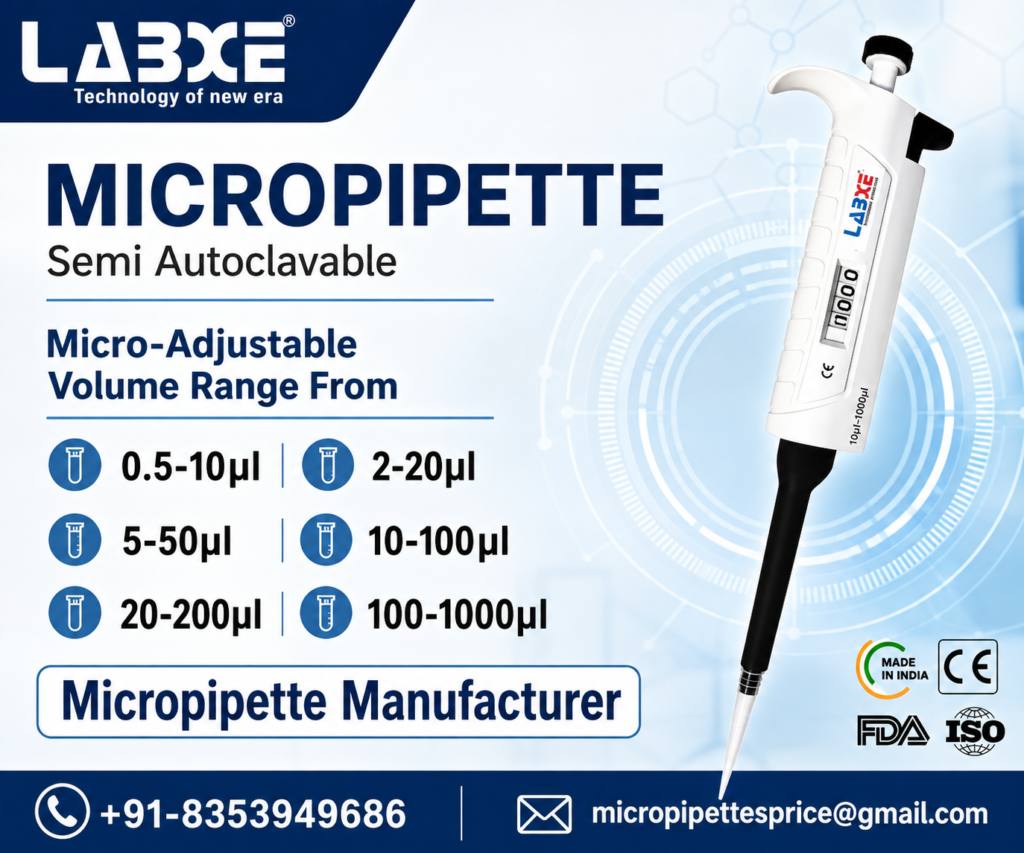
Micropipette Maintenance vs Pipette Care: Essential Guide LABXE
Proper micropipette maintenance is essential for accurate and reliable liquid handling in research, pharmaceutical, diagnostic, biotechnology and educational laboratories. Regular cleaning, correct storage and periodic calibration can help maintain consistent pipetting performance and extend the working life of the instrument.
Although the terms pipette and micropipette are often used together, their maintenance requirements can vary depending on the design, volume range and operating mechanism.
What Is a Micropipette?
A micropipette is a precision laboratory liquid handling instrument designed to aspirate and dispense very small volumes of liquid, generally measured in microlitres (µL).
Common types include:
- Variable volume pipettes
- Fixed volume pipettes
- Single channel models
- Multichannel models
- Fully autoclavable models
Because these instruments handle precise liquid volumes, proper care and calibration are important for dependable laboratory results.
Why Micropipette Maintenance Is Important
Regular micropipette maintenance helps keep the instrument operating smoothly and can reduce errors caused by contamination, damaged seals or improper handling.
Good maintenance can help:
- Maintain accuracy and repeatability
- Reduce contamination risk
- Detect leaks and worn components
- Improve pipetting consistency
- Extend instrument service life
- Reduce unexpected laboratory downtime
How to Maintain a Micropipette
1. Clean the Instrument Regularly
Wipe the external body using a suitable laboratory cleaning solution. The lower assembly and tip cone should be inspected regularly for contamination or liquid residue.
Always follow the manufacturer’s cleaning instructions before using chemicals or disinfectants.
2. Use Compatible Pipette Tips
Correct tip selection is an important part of micropipette maintenance.
A poorly fitting tip may create an improper seal and affect aspiration or dispensing. Always use tips that are suitable for the model and required volume range.
3. Avoid Liquid Entering the Pipette
Keep the instrument upright while liquid is inside the tip whenever possible.
Tilting or laying the pipette horizontally with liquid inside may allow contamination to reach internal components.
4. Store the Pipette Correctly
When not in use, keep the instrument vertically on a suitable pipette stand.
Proper storage protects the pipette from accidental damage and helps prevent liquid residue from entering the internal mechanism.
5. Never Exceed the Volume Range
Do not force the volume adjustment beyond the specified minimum or maximum range.
Operating outside the recommended range may damage the adjustment mechanism and affect performance.
Check the Pipette for Leakage
Leakage is one of the common reasons for inconsistent liquid handling.
If the pipette does not hold liquid properly, inspect:
- Pipette tip
- Tip cone
- Piston
- O-rings
- Seals
- Lower assembly
A damaged or contaminated component may require cleaning, replacement or professional servicing.
Micropipette Calibration
Calibration is an important part of micropipette maintenance because it helps verify whether the instrument is dispensing the expected volume accurately and consistently.
Calibration frequency depends on:
- Frequency of use
- Laboratory quality requirements
- Type of application
- Working environment
- Manufacturer recommendations
Laboratories performing critical analytical or quality-control work may require more frequent performance verification.
Internal link suggestion: Link the words micropipette calibration to your relevant LABXE calibration or micropipette product page.
Pipette Maintenance vs Micropipette Maintenance
General pipette maintenance depends on the type of liquid handling device being used.
Glass and serological pipettes mainly require proper cleaning, sterilization and safe storage. Mechanical laboratory pipettes contain internal components such as pistons, seals and springs and therefore require additional inspection and calibration.
Electronic pipettes may also require battery care, electronic checks and manufacturer-specific servicing.
For this reason, maintenance procedures should always match the design of the individual instrument.
When Should a Micropipette Be Serviced?
Consider professional inspection or servicing if you notice:
- Irregular dispensing
- Liquid leakage
- Difficult volume adjustment
- Damaged tip cone
- Unusual plunger resistance
- Poor repeatability
- Failed calibration results
Early servicing can prevent minor issues from developing into more expensive repairs.
Best Practices for Reliable Pipetting
For better performance:
- Use high-quality compatible tips
- Pre-wet the tip when appropriate
- Hold the instrument correctly
- Aspirate and dispense smoothly
- Avoid sudden plunger movement
- Keep the pipette clean
- Store it vertically after use
- Schedule calibration according to laboratory requirements
These simple practices support both instrument performance and reliable laboratory workflows.
Conclusion
Regular micropipette maintenance is essential for laboratories that depend on accurate and repeatable liquid handling. Proper cleaning, correct pipette tips, careful storage, routine inspection and periodic calibration can help maintain dependable performance and increase the service life of the instrument.
LABXE offers laboratory micropipettes, bottle top dispensers, pipette accessories and other liquid handling solutions for research, pharmaceutical, diagnostic and professional laboratory applications.
Internal link suggestion: Link laboratory micropipettes to your main LABXE micropipette category or product page.
Frequently Asked Questions
How often should micropipette maintenance be performed?
Basic cleaning and inspection should be performed regularly. Calibration and professional servicing frequency depends on usage, laboratory requirements and manufacturer recommendations.
Why does a micropipette start leaking?
Common causes include damaged seals, contaminated internal components, an incorrectly fitted tip or damage to the tip cone.
Should micropipettes be stored vertically?
Yes. A suitable pipette stand is generally recommended for safe storage.
Is calibration necessary after servicing?
Calibration or performance verification is recommended after major servicing or replacement of components that may affect liquid delivery.